
20 May, 2026 | Category: Aerospace Quality, AS9100, Supplier Quality Assurance
COTS Components in Manufacturing and Engineering: Quality, Supply Chain and Configuration Control
Commercial Off-The-Shelf (COTS) components now form a critical part of modern manufacturing, aerospace, defence, telecommunications, automotive and industrial engineering products. Organisations use COTS parts to reduce development time, lower costs and accelerate product delivery. However, while COTS procurement offers clear commercial advantages, it also introduces significant quality assurance, supply chain and configuration management challenges.
Many businesses assume that buying a commercially available part removes technical and quality risk. In reality, the opposite often applies. When organisations purchase COTS items, they usually lose direct control over the component design, manufacturing process, inspection regime and lifecycle management.
Without the correct controls, a simple purchased component can become a major source of production disruption, product nonconformance, obsolescence risk and customer dissatisfaction.
This article explains what COTS components are and outlines the key quality, procurement, traceability and configuration management controls organisations should implement to manage them effectively.
What Are COTS Components?
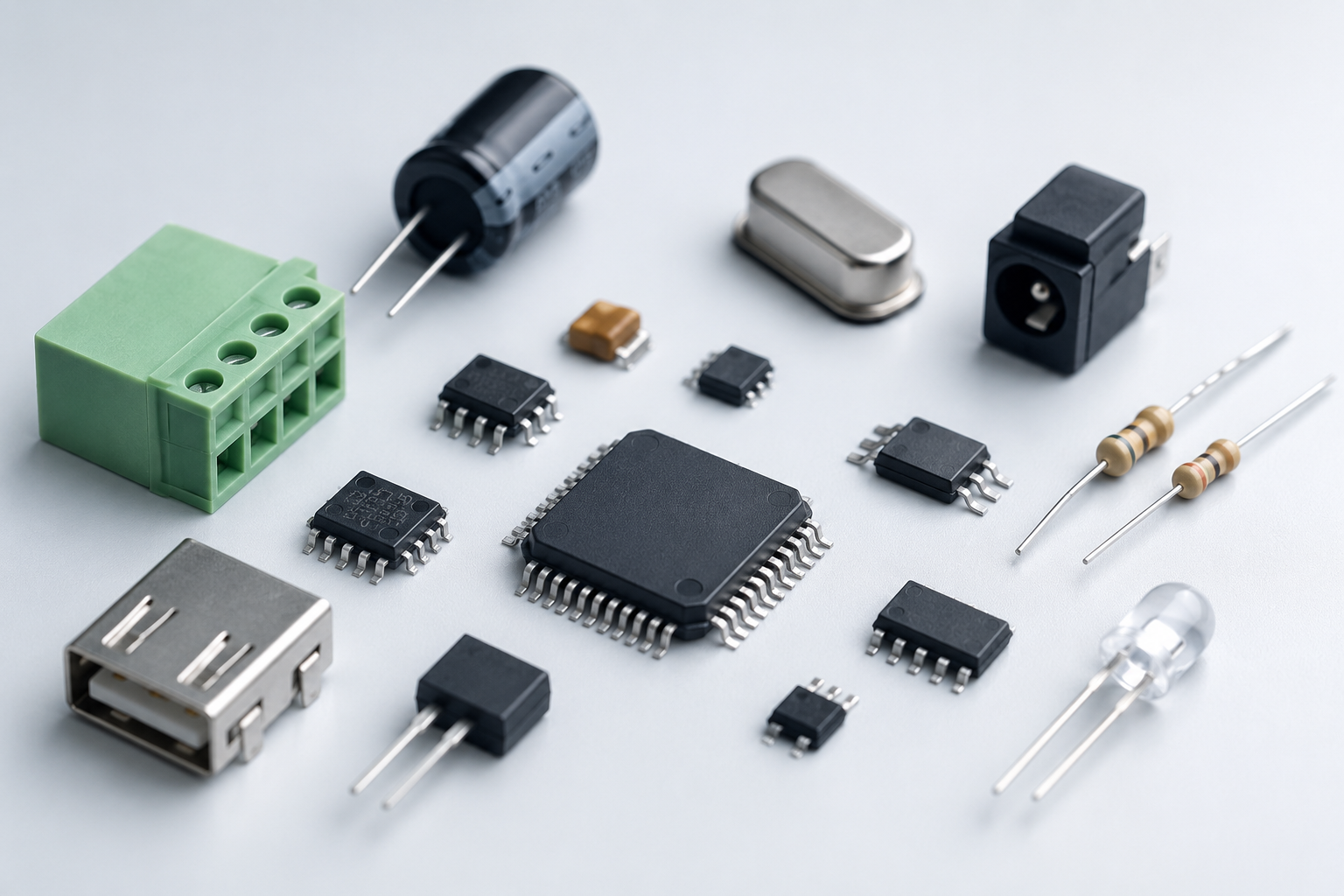
Commercial Off-The-Shelf (COTS) components are standard products or parts that manufacturers purchase from external suppliers rather than designing and producing internally.
Examples include:
- Electronic components
- Power supplies
- Bearings and fasteners
- Network hardware
- Sensors
- Connectors and cable assemblies
- Software modules
- Industrial control equipment
- Mechanical hardware
COTS products usually exist as catalogue items with predefined specifications and standard configurations.
Organisations favour COTS solutions because they:
- Reduce development costs
- Shorten product development cycles
- Improve availability
- Reduce tooling investment
- Provide access to proven technologies
- Simplify procurement
However, COTS procurement creates dependencies on external manufacturers and supply chains that businesses cannot fully control.
The Hidden Risks Behind COTS Procurement
Many engineering and procurement teams focus heavily on cost and lead time during supplier selection. While those factors matter, they only represent part of the risk profile.
Unlike internally controlled components, organisations rarely gain full visibility of:
- Manufacturing methods
- Inspection processes
- Process capability
- Material sourcing
- Product change history
- Supplier sub-tier controls
- Obsolescence planning
- Counterfeit prevention controls
This lack of visibility creates several operational and quality risks.
Limited Design Control
When using COTS parts, organisations normally cannot influence:
- Product design
- Material selection
- Process validation
- Firmware updates
- Software architecture
- Internal testing methods
The supplier owns the intellectual property and controls product changes.
A supplier may alter:
- Materials
- Manufacturing location
- Sub-tier suppliers
- Firmware revisions
- Functional characteristics
- Packaging methods
without prior customer approval unless contractual controls exist.
This creates significant risk for regulated industries such as aerospace, defence and medical manufacturing.
Procurement Controls for COTS Components
Effective COTS management begins with procurement governance.
Procurement teams should avoid treating COTS purchases as low-risk catalogue transactions. Instead, organisations should apply risk-based supplier approval and control processes.
Supplier Approval and Qualification
Before procurement teams place orders, quality and supply chain functions should assess:
- Supplier certifications
- Manufacturing capability
- Financial stability
- Export control compliance
- Counterfeit prevention measures
- Traceability capability
- Obsolescence management processes
- Change notification processes
Relevant certifications may include:
- ISO 9001
- AS9100
- ISO 14001
- ISO 27001
- IPC standards for electronics
Supplier approval should also include ongoing performance monitoring rather than one-time approval.
Key performance indicators often include:
- On-Time Delivery (OTD)
- Parts Per Million (PPM)
- Supplier corrective action closure
- Escapes and returns
- Lead time performance
- Product conformity trends
The Challenge of Inspection and Verification
One of the biggest limitations with COTS procurement involves inspection data availability.
Many suppliers provide only:
- Certificates of Conformance (CoC)
- Limited dimensional data
- Basic test reports
- Commercial datasheets
This often leaves purchasing organisations with insufficient evidence to verify full product conformity.
Why Incoming Inspection Alone Is Not Enough
Traditional incoming inspection cannot always identify:
- Latent defects
- Firmware issues
- Counterfeit components
- Material substitution
- Internal process failures
- Reliability weaknesses
For complex assemblies and electronics, destructive testing or full validation may prove impractical or prohibitively expensive.
Organisations should therefore adopt layered assurance controls.
These may include:
- Approved supplier lists (ASL)
- Source inspection
- First Article Inspection (FAI)
- Risk-based sampling
- Functional testing
- Environmental stress screening
- Batch verification
- Enhanced receiving inspection for high-risk items
The higher the product criticality, the greater the required level of supplier assurance.
Counterfeit and Obsolescence Risks
Global supply chain instability has significantly increased counterfeit risk within electronic and industrial component markets.
When lead times increase, organisations often purchase through brokers or non-authorised distributors. This introduces major risks including:
- Counterfeit parts
- Refurbished components sold as new
- Relabelled products
- Non-conforming materials
- Unapproved revisions
High-reliability industries should prioritise procurement through authorised distribution channels wherever possible.
Obsolescence Management
COTS lifecycle management presents another major challenge.
Suppliers may discontinue products with minimal notice, creating:
- Redesign requirements
- Qualification costs
- Production delays
- Customer impact
- Configuration disruption
Effective obsolescence management includes:
- Lifecycle monitoring
- Last Time Buy planning
- Alternative part qualification
- Approved substitution processes
- Strategic stockholding
Obsolescence risk should form part of programme risk management activities from the outset.
Product Traceability Requirements
Traceability remains one of the most critical controls for COTS component management.
Without robust traceability, organisations struggle to:
- Contain quality escapes
- Conduct recalls
- Investigate failures
- Support warranty claims
- Meet regulatory obligations
- Demonstrate compliance
What Should Traceability Include?
Effective traceability should link:
- Purchase orders
- Supplier batches
- Lot numbers
- Serial numbers
- Manufacturing dates
- Inspection records
- Assembly records
- Customer deliveries
For regulated sectors such as aerospace and defence, traceability often extends down to individual component level.
Electronic manufacturing frequently requires:
- Full batch genealogy
- Date code control
- RoHS/REACH declarations
- Material compliance records
- Component authenticity verification
Digital traceability systems now play an increasingly important role in maintaining end-to-end supply chain visibility.
Configuration Management and Change Control
Configuration management often receives insufficient attention during COTS integration projects.
This creates serious problems when suppliers introduce uncontrolled product changes.
Why Configuration Control Matters
A seemingly minor supplier modification can affect:
- Fit and form
- Electrical compatibility
- Software integration
- Thermal performance
- Reliability
- Safety certification
Without proper configuration control, organisations risk introducing mixed configurations into production environments.
Essential Configuration Management Controls
Businesses should establish formal controls for:
- Approved part numbers
- Revision status
- Firmware versions
- Software baselines
- Approved alternates
- Engineering change approval
- Supplier change notifications
- Product lifecycle status
Supplier agreements should define mandatory notification requirements for:
- Material changes
- Process changes
- Factory relocation
- Design revisions
- Sub-tier supplier changes
- End-of-life announcements
Engineering, procurement and quality teams must work collaboratively to evaluate change impact before implementation.
Building a Robust COTS Assurance Strategy
Successful organisations treat COTS governance as a strategic quality activity rather than a purchasing exercise.
Strong COTS management requires collaboration across:
- Procurement
- Engineering
- Quality Assurance
- Supply Chain
- Manufacturing
- Programme Management
The most effective businesses implement a risk-based framework that aligns component criticality with appropriate assurance controls.
Best Practice COTS Control Measures
High-performing organisations typically implement:
- Approved supplier frameworks
- Risk-based procurement controls
- Supplier performance scorecards
- Incoming inspection strategies
- Counterfeit prevention plans
- Product traceability systems
- Formal configuration management
- Obsolescence planning
- Supplier change notification processes
- Periodic supplier audits
These controls reduce operational risk while maintaining the commercial advantages of COTS procurement.
Final Thoughts
COTS components offer significant commercial and operational benefits, but organisations should never assume that commercially available parts are automatically low risk.
The lack of direct design authority, limited visibility of manufacturing controls and reduced access to detailed inspection data introduce quality and supply chain challenges that require structured management.
Businesses that implement strong procurement governance, supplier assurance, traceability and configuration management controls place themselves in a far stronger position to manage risk, maintain compliance and protect product integrity.
As supply chains become increasingly global and complex, effective COTS management will continue to play a critical role in operational resilience, regulatory compliance and long-term business performance.